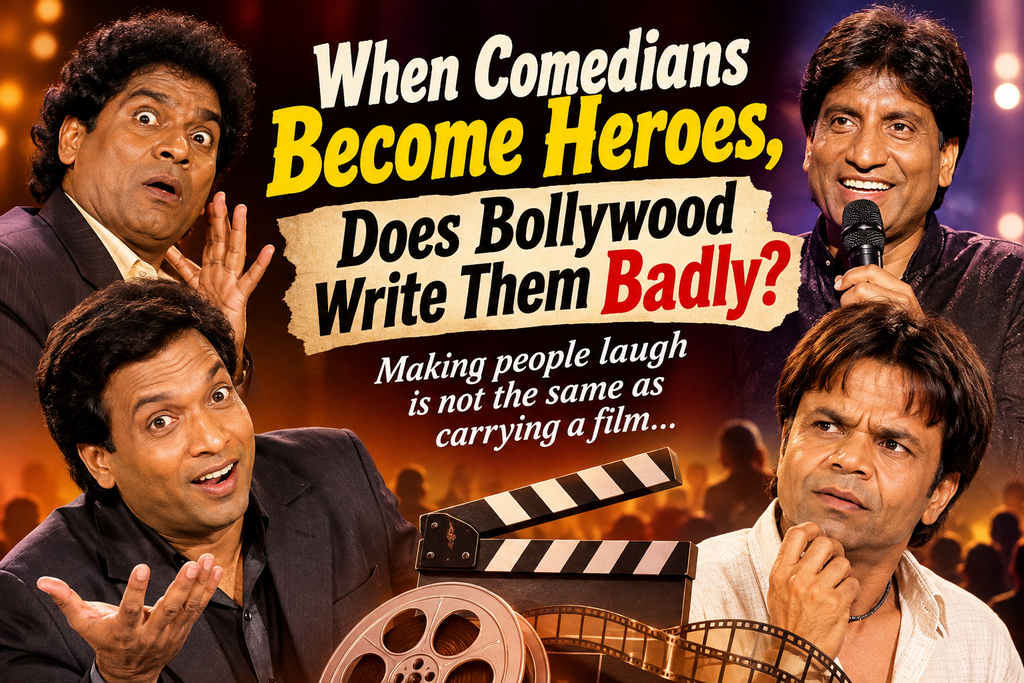
Hindi cinema has no shortage of comedians who can hold an audience in the palm of their hand. A few minutes of screen time, a raised eyebrow, a perfectly judged pause, and a whole theatre is laughing. Yet when the same performers are handed the lead role, the results are often underwhelming.
The usual explanation is that audiences love comedians as side characters but won’t accept them as heroes. I think that explanation is lazy. The more useful question is a different one: when Bollywood has cast comedians as leads, did it write films for them, or did it simply cast them and hope the laughter would carry the story?
My argument is simple. Casting a comedian is not the same as writing comedy, and it is certainly not the same as writing a protagonist. The record, when you look at it closely, supports that view.
Three Kinds of Comic Performers, Three Different Problems
Before blaming “comedians” as a group, it helps to separate them, because they face very different challenges.
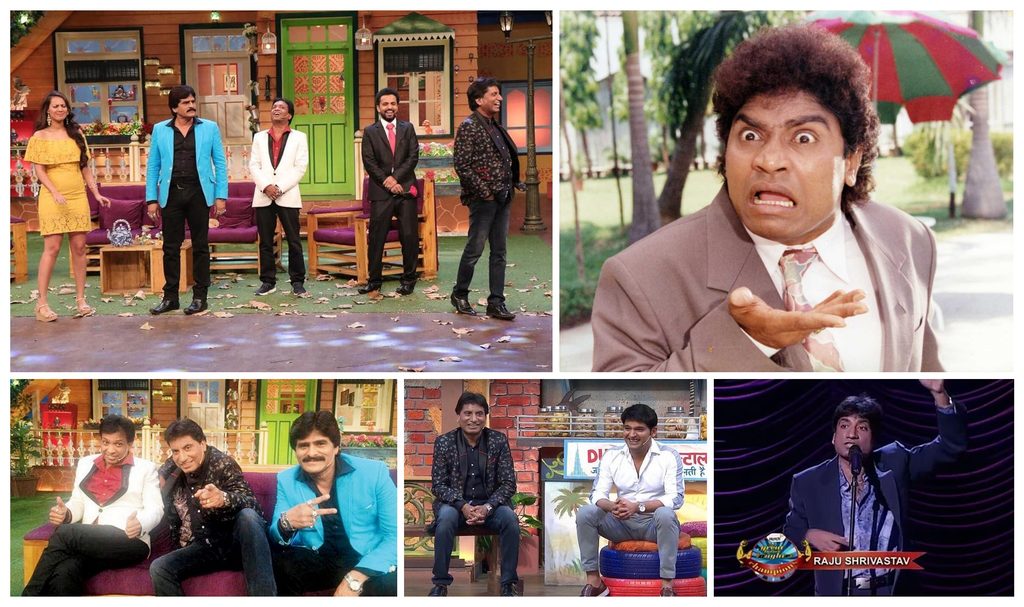
The stand-up and television comedian. Raju Srivastava, who passed away in 2022, and Sunil Pal built their fame on live performance and television. Their craft is the monologue: observation, a recurring character, a punchline every thirty seconds. The audience arrives ready to laugh. Both appeared in films, but neither was ever given a real chance to show whether that craft could be reshaped into a two-and-a-half-hour narrative.
The film comic actor. Johnny Lever is the best-known example. He became indispensable to the Hindi film of the 1990s, from Baazigar to Dulhe Raja to Deewana Mastana, by lifting scenes that someone else’s story had already set up. His job was to change the energy of a film, not to carry it.
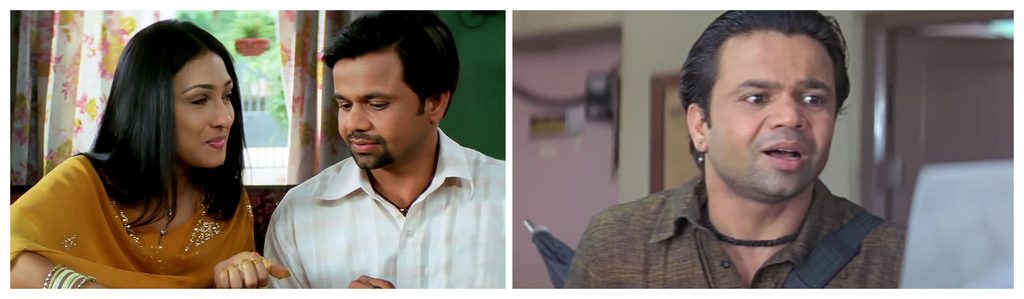
The character actor who happens to be funny. Rajpal Yadav belongs here. He has led films such as Main Madhuri Dixit Banna Chahti Hoon and Main, Meri Patni Aur Woh, and he has also played serious, unsettling and vulnerable characters in films like Jungle and Company. His comic talent is one tool among many.
Lumping these three together as “comedians who didn’t work as heroes” hides what actually differs: how much of the story each was ever trusted to carry.
Funny Is Not the Same as Invested
A comedian’s great strength is the instant reaction. A well-timed line or expression can rescue an ordinary scene.
A feature film asks for something slower. The audience has to understand what the protagonist wants, what stands in the way and what it will cost him. We need to care about the outcome after the jokes stop.
That is where the weak comedian-led vehicle usually breaks. The formula, sometimes stated openly, is: take a popular comic, make him the lead and fill the film with comedy. But a string of funny moments is not a story. If the screenplay is thin, the performer ends up carrying a film that was never strong enough to carry itself.
Stand-up makes this harder. In a live act, the audience follows the performer. In cinema, the audience follows a character, and the humour has to grow from situation and relationship rather than arrive as an independent routine. A comic who is brilliant at the first can look lost in the second if nobody has written the second for him.
Why Hera Pheri Is Evidence, but Not for the Obvious Argument
The films people cite as Bollywood comedy at its best, Hera Pheri and Welcome, are worth looking at closely.
Neither is built around one comedian. Their laughs come from several characters with clashing goals, escalating misunderstandings and increasingly absurd situations. Even Hera Pheri’s most beloved character, Paresh Rawal’s Baburao, works because he is wired into a plot, a trio and a running chain of consequences. The audience laughs because the situation is funny, not only because an actor is funny.
This point cuts both ways, and it should be stated plainly. One reading is that Bollywood comedy succeeds when it avoids the comedian-as-hero model. The reading I prefer is narrower: it succeeds when the writing does the heavy lifting. That is also why Rajpal Yadav is so effective inside ensembles like Hungama and Dhol. The structure around him does half the work, and he supplies the rest.
The lesson is not that comedians should stay in supporting roles. It is that the film must be built so that something other than the comedian’s face is generating the laughs and holding the story together.
The Hero Template Problem
There is also a cultural factor. For decades the Hindi film hero has been expected to do many things at once: carry the romance, drive the conflict, deliver the dramatic peaks and project a certain physical authority.
Comedy, in that scheme, was a department, not a personality. The funny man provided relief while someone else provided the spine of the film. So when a comedian finally gets a lead, the industry often squeezes him into the standard template: a romance, a villain, a fight, a song. The comic identity that made him popular becomes decoration rather than the engine of the character.
A protagonist doesn’t have to be a conventional romantic hero. He can be an underdog, a dreamer, a failure rebuilding his life, an ordinary man whose view of the world is itself comic. What matters is that we care about him.
What Happened When It Was Done Right
The strongest part of the evidence is the set of cases where comic performers were given leads that fit them.
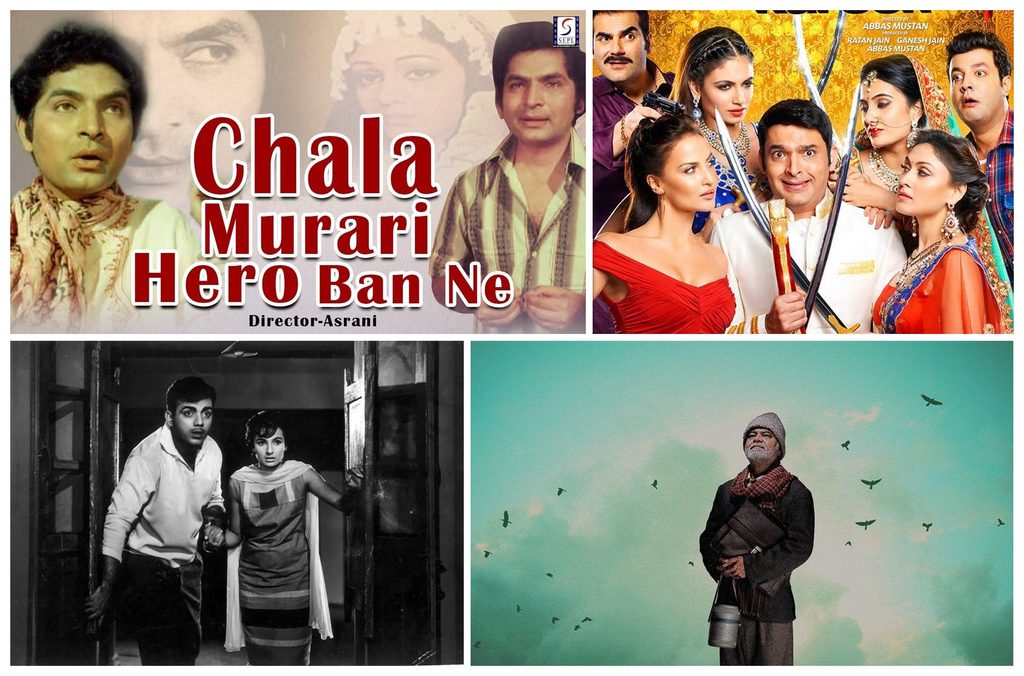
Mehmood was a genuine comic star of the 1960s who headlined and produced films such as Bhoot Bungla, building the story around his persona instead of fitting him into someone else’s.
Asrani directed and starred in Chala Murari Hero Banne, a film that is, fittingly, about a man trying to become a hero, which turned the comedian’s own situation into the plot.
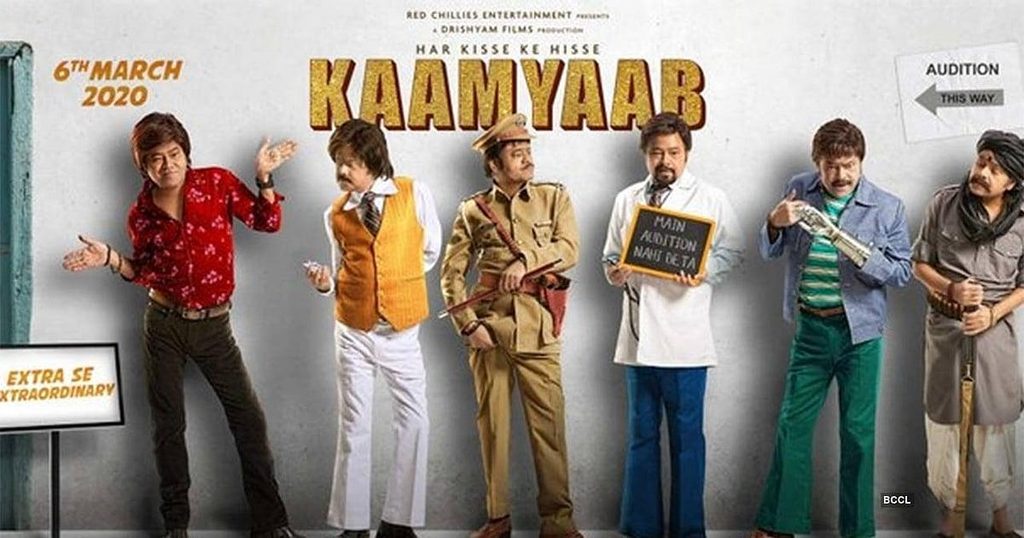
Sanjay Mishra is the clearest modern proof. For years he was the reliable comic supporting actor. Then films like Ankhon Dekhi, Kaamyaab and Vadh gave him protagonists with an inner life: stubborn, sad, funny and human at once. The audience did not have to be persuaded to follow him. The writing did that.
Kapil Sharma, a stand-up and television star, headlined Kis Kisko Pyaar Karoon and Firangi. The results were more mixed, which is useful in its own way: it shows that even a hugely popular comic needs a script that gives his persona a reason to exist for two hours.
What the successful cases share is not a particular style of comedy. It is that someone sat down and asked what kind of man this performer could convincingly play, and what story would test him.
Is This Only a Bollywood Problem?
It isn’t. Hollywood has seen the same pattern: Jim Carrey’s and Robin Williams’s most admired work often came when comic energy was channelled into a character with something at stake, as in The Truman Show or Good Will Hunting, rather than a vehicle that simply aimed them at the camera.
South Indian cinema offers a useful contrast as well. Comedians such as Yogi Babu in Tamil cinema and Soori in Viduthalai have been allowed to carry films, sometimes in distinctly un-comic registers, because the surrounding industry has shown more willingness to experiment with who a lead can be. The difference lies less in audiences than in what writers and producers are prepared to attempt.
What a Good Comedian-Led Film Needs
If the problem is writing, then the answer is practical. Based on the examples above, a comedian-led film tends to work when it:
- Builds the premise around the persona. The comic’s way of seeing the world should be the starting point of the story, not an add-on.
- Gives the character a real want and real stakes. The audience should worry about him between the laughs.
- Uses the underdog or the ordinary man. Sympathy gives the comedy somewhere to land.
- Rewards range. Moments of vulnerability make the funny scenes funnier.
- Surrounds him with strong supporting characters. A good ensemble lets the lead breathe instead of performing every beat.
- Lets the comedy come from the situation. Jokes that could be lifted out of the film and told elsewhere are a warning sign.
So Did Audiences Reject Them, or Did the Films Fail Them?
It would be too strong to say audiences never rejected a comedian-led film. A film’s fate depends on its script, direction, release, marketing and competition as much as on its lead. Commercial failure and creative failure are also different things: a film can underperform and still contain a fine performance, and a hit can still have a poorly written lead.
So each film deserves to be judged on its own terms. But taken together, the pattern points in a clear direction. The comic performers who have thrived as leads were handed characters, not just screen time. The ones who struggled were often handed a premise and a poster.
The real test of a leading actor is not how many laughs he can get in a scene. It is whether the audience will follow his character for the next two hours.
Perhaps Bollywood’s mistake was never giving comedians the lead. Perhaps it was assuming that casting a comedian was the same as writing a film for him.