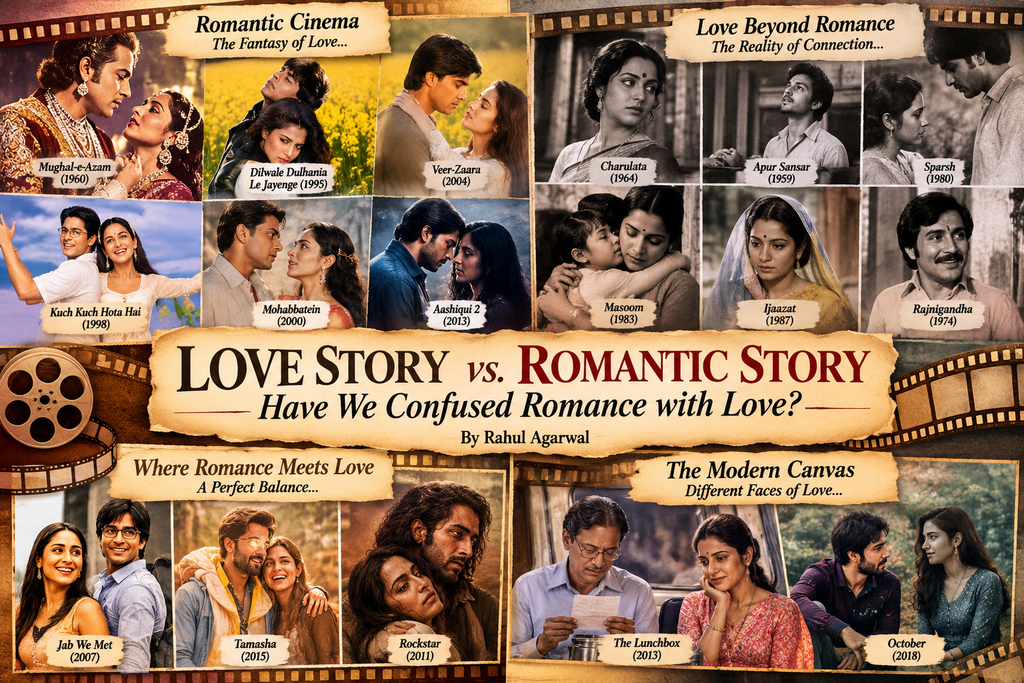
Have we confused romance with love? For decades, Indian cinema has taught us to celebrate love through grand gestures, beautiful songs, dramatic reunions and extravagant proposals. But is that really what a love story looks like?
Compare the world of Dilwale Dulhania Le Jayenge (1995) with The Lunchbox (2013). One makes us dream about falling in love, while the other makes us feel the quiet loneliness of two people finding an unexpected emotional connection. Both explore love, but in two very different cinematic languages. That brings us to a distinction between a romantic story and a love story.
What is a romantic story?
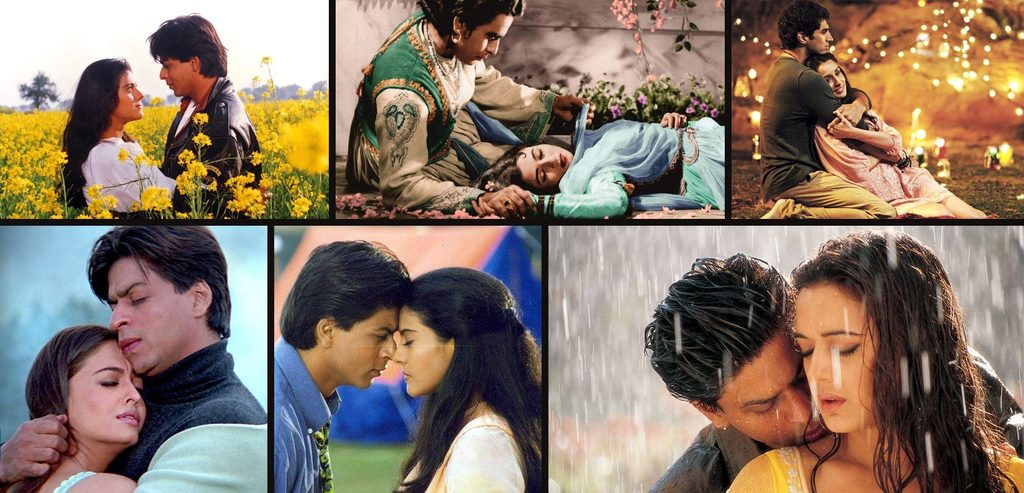
A romantic story revolves around the excitement and fantasy of falling in love. It is expressive, dramatic and larger than life. It offers beautiful locations, memorable music, passionate encounters and the idea that love can overcome every obstacle. It creates an idealised world where ordinary experiences become extraordinary.
Mughal-e-Azam (1960), Dilwale Dulhania Le Jayenge, Kuch Kuch Hota Hai (1998) and Veer-Zaara (2004) are different expressions of this cinematic romance. They make audiences fall in love with the idea of love itself.
And what is a love story?
A love story doesn’t need grand gestures or extraordinary circumstances. Sometimes it is about two people discovering each other through ordinary conversations, shared experiences and emotional vulnerability. It explores what happens beyond the initial attraction: the insecurities, disagreements, compromises and responsibilities that come with a relationship.
Consider The Lunchbox. Ila and Saajan don’t meet through a conventional romantic encounter. Their connection grows through handwritten letters exchanged inside a mistakenly delivered lunchbox. Their relationship is defined not by grand declarations or physical proximity but by the emotional space they create for one another.

Is this a new kind of storytelling?
Not at all. Indian cinema explored this long before contemporary filmmakers began experimenting with unconventional relationships.
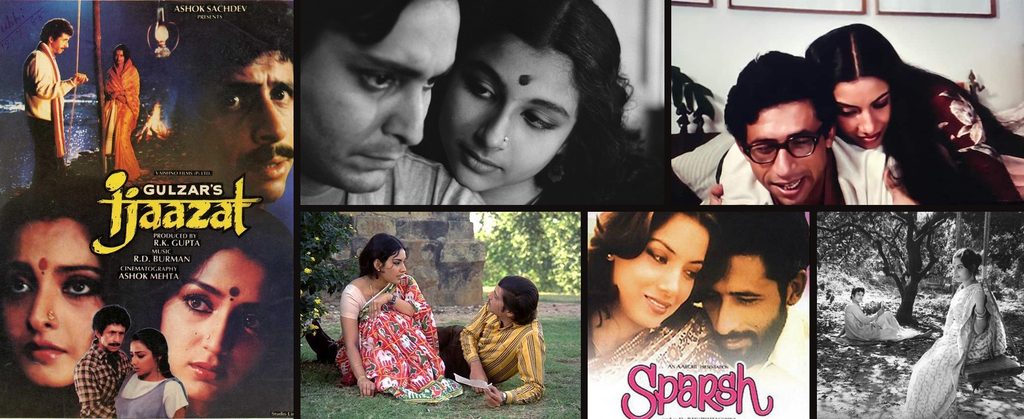
Satyajit Ray’s Charulata (1964), based on Tagore’s novella Nastanirh, is among the finest examples. The bond between Charu and Amal, her husband’s cousin, grows through literature, poetry and unspoken feelings. Ray conveys its complexity through silences and glances rather than declarations.
Ray’s Apur Sansar (1959) shows how love can develop between two people who enter marriage as strangers. Apu and Aparna discover companionship through everyday life. The film also reminds us how fragile that closeness is: Aparna’s death shapes the rest of the story, and Apu’s grief becomes as central as the romance itself.
Sai Paranjpye’s Sparsh (1980) explores acceptance, insecurity and the need to understand another person’s individuality. Shekhar Kapur’s Masoom (1983) shows how trust and companionship are tested when a husband’s past comes home as a child, and how love then demands forgiveness and difficult decisions. Gulzar’s Ijaazat (1987) examines memory, separation and the emotions that linger after two people move apart.
Basu Chatterjee and Basu Bhattacharya brought the same sensibility to everyday life. Chatterjee’s Rajnigandha (1974) captured a woman’s confusion between a past attachment and a present one. His Baton Baton Mein (1979) built a romance out of conversation and misunderstanding. Bhattacharya’s Anubhav (1971) and Griha Pravesh (1979) looked at marriage after the initial excitement fades, including emotional distance and the effort needed to rebuild intimacy. These filmmakers understood that relationships are about everything that happens after two people come together.
The 1990s and early 2000s then brought a more aspirational expression of romance. Dilwale Dulhania Le Jayenge, Kuch Kuch Hota Hai and Mohabbatein (2000) created a language audiences grew up celebrating: international locations, elaborate songs, family celebrations and dramatic declarations.
Newer filmmakers returned to more intimate territory. The Lunchbox, Dum Laga Ke Haisha (2015), Qarib Qarib Singlle (2017) and October (2018) explore loneliness, companionship and emotional vulnerability. Tamasha (2015) goes further, showing how two people can reshape each other’s identities, with Ved and Tara’s relationship becoming a journey of self-discovery. Not all of these are conventional love stories, which is precisely what makes them interesting.
And then there is Jab We Met (2007), which combines both approaches. On the surface it is an entertaining romantic film full of humour and memorable dialogue. Underneath, it is a story about loneliness, emotional healing and rediscovering oneself through another person.
Does that make romantic stories less meaningful?
Absolutely not.
A larger-than-life film can still communicate genuine emotion. Sometimes fantasy lets filmmakers express feelings ordinary storytelling cannot. The sacrifice in Veer-Zaara, the longing in Rockstar (2011) and the intensity of Aashiqui 2 (2013) all explore heartbreak, commitment and vulnerability.
The distinction is not about which form is superior. It is about what each film wants its audience to experience. A romantic story makes us imagine what falling in love could look like. A love story makes us reflect on what being emotionally connected to another person actually means.
Romance celebrates the moments we remember: the first meeting, the first kiss, the songs and the grand declarations. Love also lives in everything between those moments: the conversations, the silences, the disagreements, the compromises and the patience to understand another person.
Perhaps the most beautiful love stories are not about two people ending up together. Sometimes they are about two individuals who enter each other’s lives, change something within one another and leave behind an emotion that stays long after the journey ends.
Cinema can make us dream about romance, but the real beauty of a love story lies in making us feel a connection. So perhaps the question is not whether we want a romantic story or a love story, but whether we have started confusing the cinematic idea of love with the experience of actually loving someone.