From the chocolate-boy image of Saawariya to the madness of Rockstar, from the ambition of Raajneeti to the responsibility of portraying Lord Ram, Ranbir Kapoor’s journey is a story of characters that have often outlived the films themselves.
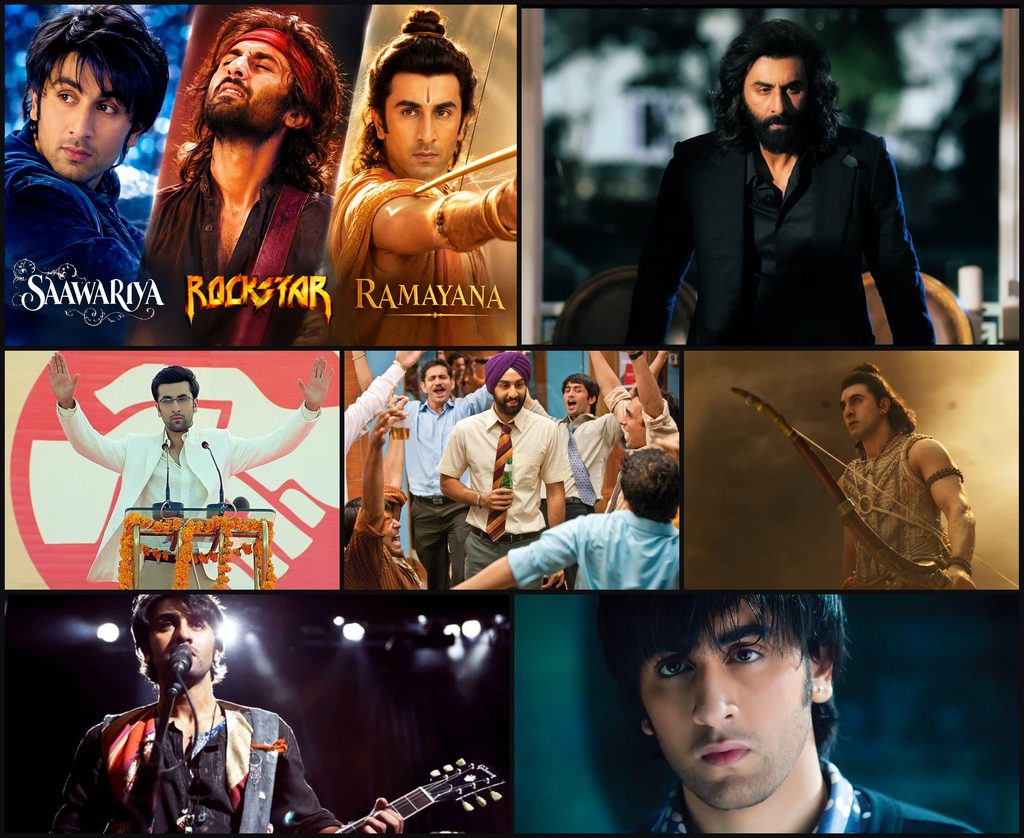
Every actor begins with an image. Some spend their entire careers protecting it, while others spend years trying to break away from it. Ranbir Kapoor belongs to the latter category.
When he entered Bollywood with Sanjay Leela Bhansali’s Saawariya in 2007, he was introduced as the quintessential chocolate-boy hero. His appearance, innocence and romantic charm immediately placed him in a familiar category. Coming from the Kapoor family, he also carried the expectations of an audience that had grown up watching his father, Rishi Kapoor, and grandfather, Raj Kapoor.
But what makes Ranbir’s career interesting is not the image with which he started. It is how frequently he has challenged that very image.
Instead of continuing with conventional romantic roles, he chose Rocket Singh: Salesman of the Year. As Harpreet Singh Bedi, he portrayed an ordinary salesman navigating workplace politics while attempting to build an honest business. It was a departure from the glamorous hero image, and although the film did not achieve the commercial success it deserved at the time, it developed a lasting appreciation among audiences.
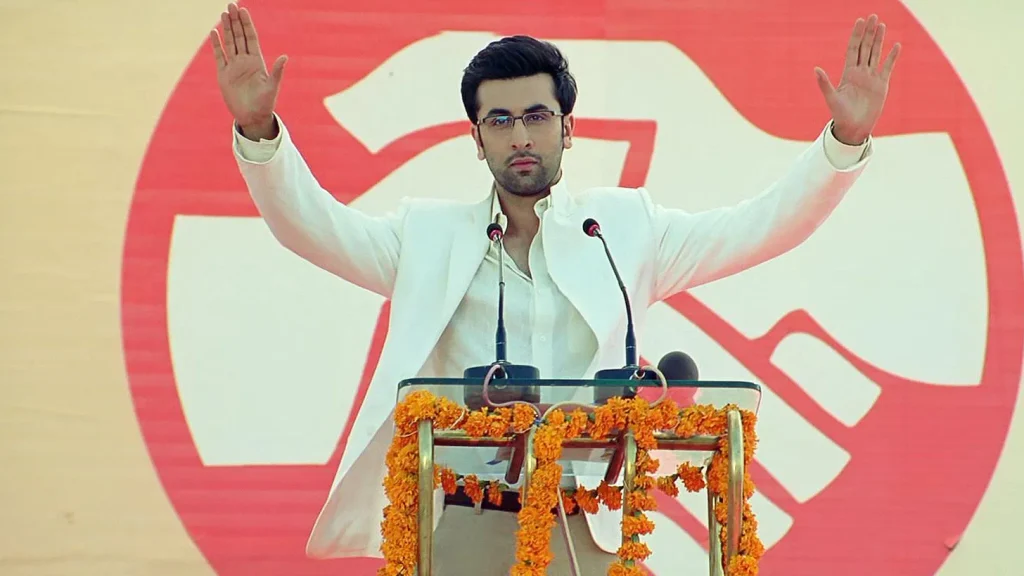
Then came Raajneeti, where he stepped into the political world as Samar Pratap. The charming young man from his earlier films was replaced by someone calculating, ambitious and increasingly consumed by power. It demonstrated that Ranbir could carry a character whose personality was far removed from his own romantic screen image.
However, if there is one film that fundamentally changed the way audiences looked at Ranbir Kapoor, it was Rockstar.

As Janardhan Jakhar, later known as Jordan, he delivered a performance that was not dependent on conventional heroism. His anger, vulnerability, frustration, expressions and unpredictable behaviour became integral to the character. The transformation was not merely about changing his appearance or adopting the personality of a musician. It was about communicating the emotional destruction of someone who finds success but struggles with himself.
That is where Ranbir’s biggest strength becomes visible: his ability to make a character recognisable through his expressions and body language.
The same quality appeared in Barfi!, where he played a deaf and mute character. Without relying on dialogue, he used physical comedy, gestures and facial expressions to establish an emotional connection with the audience. It was a reminder that acting does not always require words; sometimes, a reaction can communicate more than an entire conversation.
With Yeh Jawaani Hai Deewani, he returned to the energetic, charming personality of Bunny. But this was not simply another romantic hero. Bunny represented a generation struggling between professional ambition, personal freedom and emotional attachment. Ranbir understood that balance and gave the character an identity of its own.
Yet, his career has also demonstrated that a good actor cannot guarantee a successful film.
Besharam, Roy and Bombay Velvet did not deliver the commercial outcomes expected from them. Some of his ambitious choices struggled to connect with audiences, while others found their appreciation much later. But there is a distinction worth examining here.
When a film fails, the actor’s performance does not necessarily disappear with it.
Consider Rocket Singh. Its theatrical performance did not define its eventual reputation. Consider Rockstar. Its lasting identity is closely connected to Ranbir’s portrayal of Jordan. Even when discussing Besharam, audiences can recall his particular screen personality, energy and comic approach, despite the film’s shortcomings.
This is an interesting aspect of his filmography. Ranbir has often left behind recognisable characters even when the films themselves have not achieved the impact their makers anticipated.
His performances in Tamasha and Ae Dil Hai Mushkil further explored emotional vulnerability, complicated relationships and personal conflicts. With Sanju, he took on the challenge of portraying another prominent personality, Sanjay Dutt. His physical transformation, voice, mannerisms and attention to behavioural details demonstrated a different dimension of his craft.
Then came Brahmastra, where he became the face of an ambitious fantasy universe as Shiva. It was an important shift towards large-scale spectacle and franchise filmmaking. The film received mixed reactions, but it also demonstrated his willingness to participate in projects that attempted to expand the visual language of mainstream Hindi cinema.
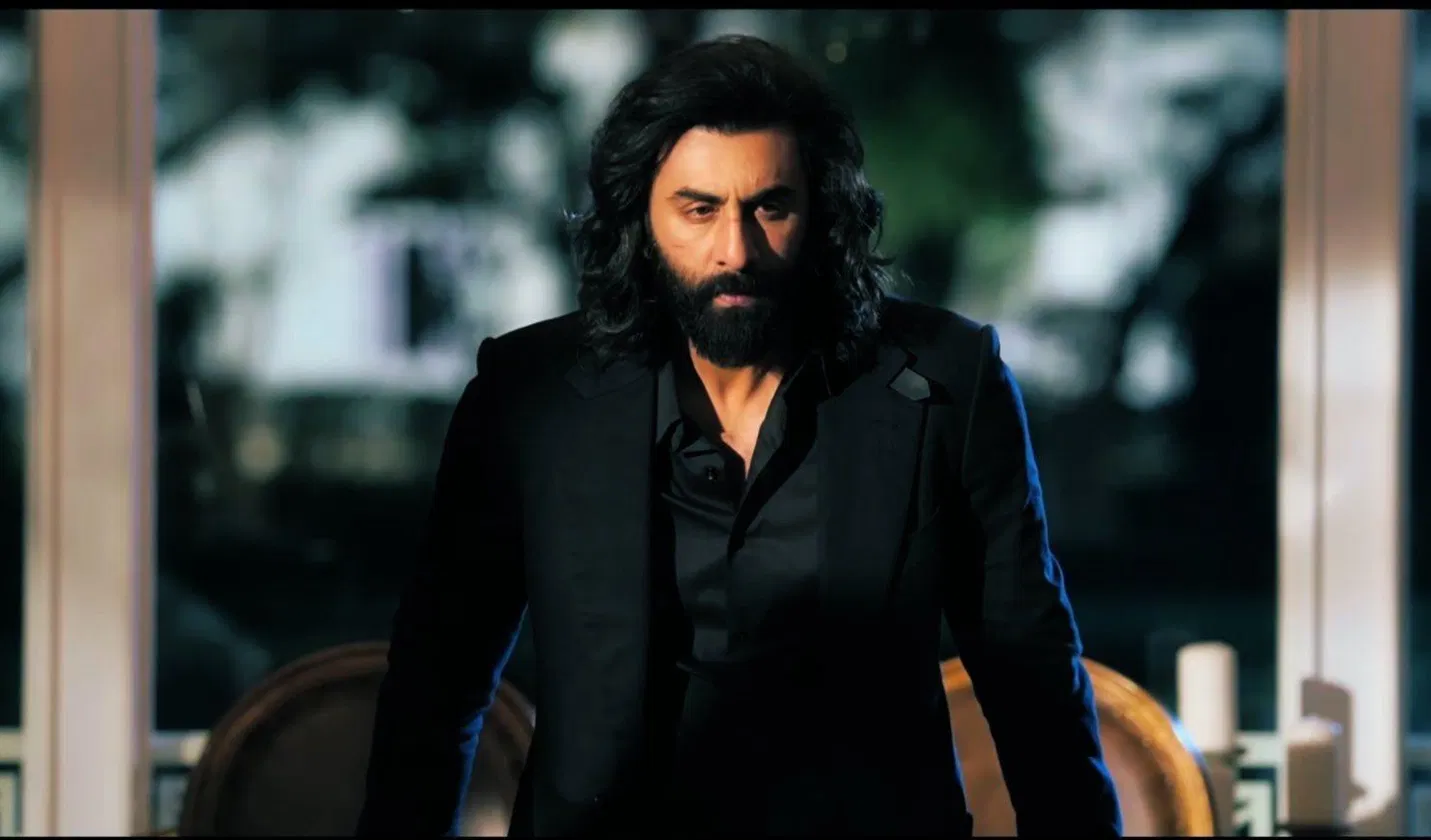
With Animal, he entered yet another territory. Ranvijay Singh was not designed to be a conventional likeable protagonist. He was obsessive, aggressive, emotionally complicated and deeply flawed. Whether audiences appreciated or criticised the character, Ranbir once again demonstrated that he was not afraid of uncomfortable roles.
But there is another dimension to this journey that deserves attention: his family legacy.
Raj Kapoor was not merely an actor. He was a filmmaker, storyteller and one of the most influential personalities in Indian cinema. Rishi Kapoor, meanwhile, established himself as a romantic star before gradually moving into character-driven performances that showcased his versatility.
Ranbir has inherited this cinematic history, but he has not attempted to recreate either of their careers. His choices reflect a different generation and a different understanding of stardom. He has moved between romance, comedy, political drama, musical tragedy, biographical drama, fantasy and psychological action.
That is perhaps his most important contribution to the Kapoor legacy: creating an identity that does not depend entirely on nostalgia.
And now comes one of the biggest responsibilities of his career.
With Nitesh Tiwari’s Ramayana: Rise of a Legend, Ranbir steps into the role of Lord Ram, a character who occupies an extraordinary place in India’s cultural imagination. This is not comparable to simply playing another popular protagonist. The expectations are fundamentally different.
<escape>Lord Ram</escape> is associated with dignity, compassion, restraint, sacrifice and righteousness. The challenge for Ranbir is not simply to look the part or deliver powerful dialogues. It is to understand the simplicity and moral strength that define the character.
Interestingly, Ranbir himself has acknowledged the responsibility, admitting that his initial reaction to the role was a sense of inadequacy. He has described the opportunity as something that made him reflect on his own life and values.
The film, scheduled to reach Indian cinemas on November 5, 2026, marks another significant chapter in his career.
What makes this casting particularly interesting is the distance between the characters he has played and the one he is now portraying. The restless Jordan, the ambitious Samar, the vulnerable Ved, the troubled Sanjay Dutt and the violent Ranvijay are all very different from the image of Lord Ram.
And that is precisely why this transition deserves attention.
Perhaps the real measure of an actor is not how successfully he repeats a performance that audiences already love, but how willing he is to enter an unfamiliar space and challenge their expectations.
Ranbir Kapoor’s career has had its commercial disappointments, questionable choices and uneven phases. But it has also produced characters that audiences continue to revisit, discuss and remember.
His journey is not a story of uninterrupted success. It is a story of an actor who has repeatedly attempted to move beyond the identity that cinema initially gave him.
He began as a chocolate-boy hero, but he never allowed that image to become his limitation.
Raj Kapoor left behind a legacy of filmmaking. Rishi Kapoor left behind a legacy of performances. Ranbir Kapoor’s journey is about discovering how far an actor can go when he refuses to be defined by either his surname or his first impression.