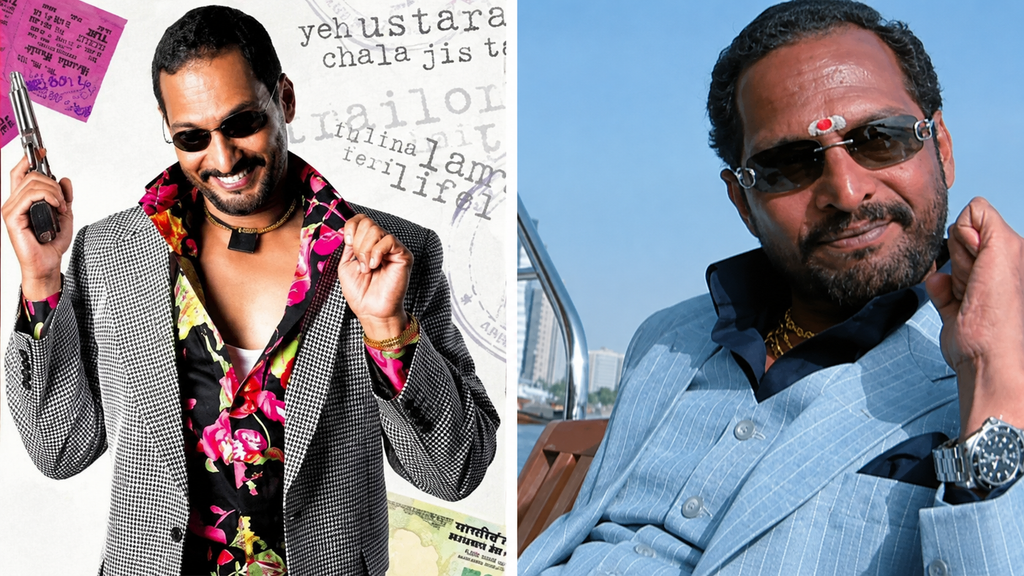
When we talk about Nana Patekar’s comic brilliance, Welcome (2007) is usually the first film that comes to mind. His portrayal of Uday Shetty became a pop-culture phenomenon, with his intimidating presence, unpredictable temper and deadpan reactions turning him into one of Hindi cinema’s most memorable comic characters. But two years earlier, in Bluffmaster! (2005), Nana had already demonstrated a distinctive understanding of comedy through his portrayal of Chandru Parekh.
What makes his performance in Bluffmaster! worth revisiting is not that it went entirely unnoticed, but that its significance is often overshadowed by the enduring popularity of Uday Shetty.
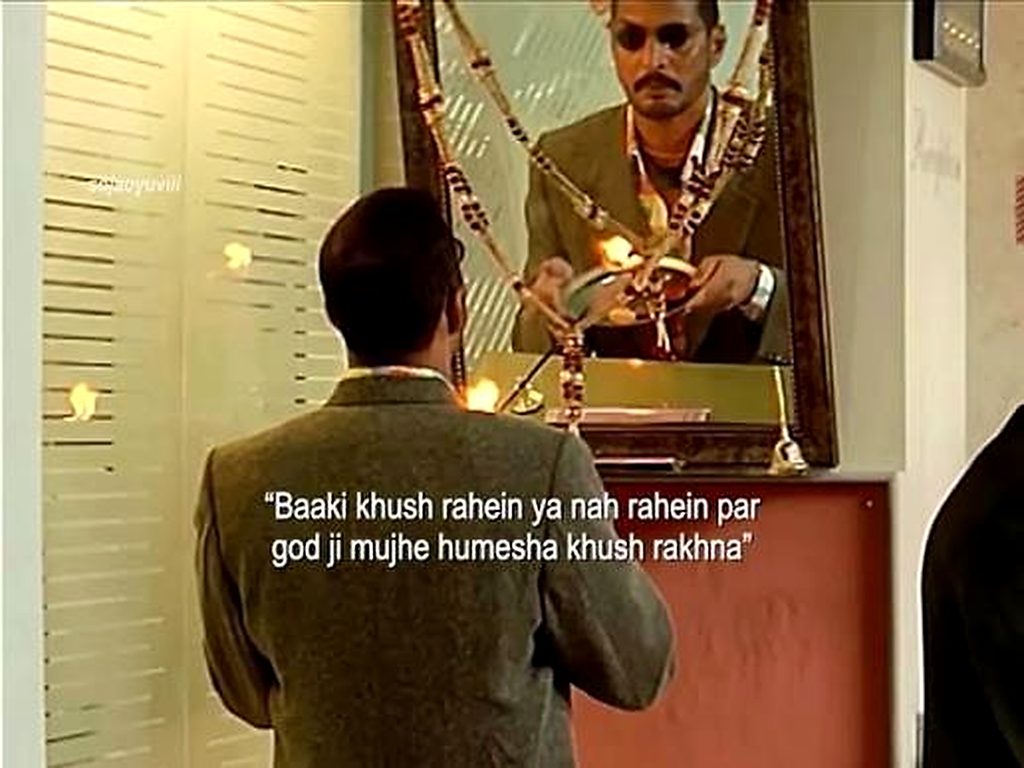
One of the film’s most memorable moments is the scene in which Chandru worships himself in front of a mirror. On paper, the situation is absurd. A gangster, already convinced of his own importance, takes his self-obsession to another level. Yet the scene works because Nana never plays it as though he is trying to make the audience laugh. He approaches Chandru’s vanity with complete seriousness, allowing the character’s exaggerated self-belief to become the source of the comedy.
This is where the performance reveals its real strength. Nana does not abandon his established intensity to become a comic performer. Instead, he redirects that intensity. His commanding presence, expressions, pauses and attitude make Chandru’s narcissism believable within the character’s world, even as the situation becomes increasingly ridiculous for the audience. The humour emerges from the contrast between how Chandru perceives himself and how we perceive him.
That distinction is important because comedy is not always about delivering punchlines or exaggerating physical gestures. Sometimes, it is about creating a character who is completely unaware of his own absurdity. Nana understands that principle instinctively, allowing the audience to discover the humour rather than forcing it upon them.
In Welcome, however, that comic sensibility finds a different expression. Uday Shetty is not simply a self-important gangster; he is a man desperately trying to maintain control, authority and dignity in situations that repeatedly undermine him. His temper, emotional reactions and attempts to appear formidable create a comic contrast that becomes even more effective through his relationship with Majnu Bhai, played by Anil Kapoor.
The difference between Chandru and Uday is what makes the comparison interesting. Chandru’s humour largely emerges from his narcissism and self-image, while Uday’s comedy often comes from the gap between his intimidating reputation and his inability to control the chaos around him. Nana adapts his performance to each character rather than repeating the same comic formula.
This is also why it would be unfair to suggest that Bluffmaster! was simply an overlooked performance. The film and its mirror scene have received appreciation over the years. The more meaningful observation is that, when audiences discuss Nana Patekar’s contribution to Hindi film comedy, the conversation often gravitates towards Welcome, leaving less room to examine the different ways he constructed humour in earlier performances.
For aspiring actors, there is a valuable lesson here. A memorable comic performance does not necessarily require an actor to become louder, more expressive or visibly funny. It requires an understanding of the character’s psychology, confidence in the performance and the ability to recognise where the humour naturally exists. An expression, a pause or an exaggerated sense of self-importance can sometimes achieve more than an entire sequence of jokes.
Nana Patekar’s journey from Chandru to Uday Shetty is not a story of an actor discovering comedy in a single film. It is an example of how an actor can use the same underlying intensity to create entirely different comic personalities.
Uday Shetty became the phenomenon, but Chandru offers us a fascinating reminder of the craft behind Nana Patekar’s comedy. Sometimes, the performance that defines an actor in popular culture is not the one that tells us the most about his abilities. It is the performance that invites us to look beyond the popularity and appreciate the acting itself.
Beyond Bluffmaster! and Welcome: Nana Patekar’s Other Comic Performances
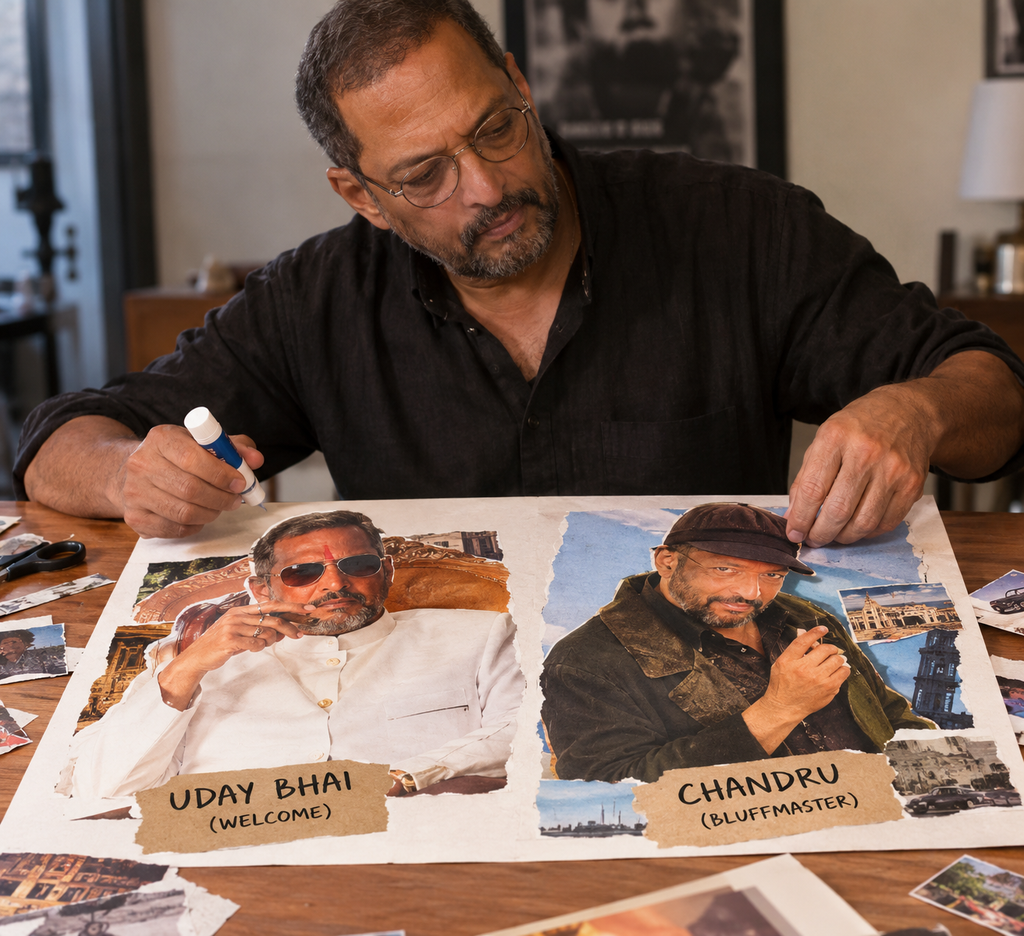
Nana Patekar’s comic range extends beyond Chandru Parekh and Uday Shetty. Across his career, he has explored different forms of humour, from dark comedy and situational comedy to eccentric characters and ensemble entertainers. Some performances are more overtly comic, while others blend humour with drama.
A selection of his other comedy and comedy-oriented films includes:
- Taxi No. 9211 (2006) — Raghav Shastri, a short-tempered taxi driver whose confrontations with John Abraham’s character generate much of the film’s humour.
- Phir Hera Pheri (2006) — Nana appears as the narrator; this is a narration credit rather than a substantial comic character.
- Hattrick (2007) — A sports comedy-drama featuring Nana as Dr. Satyajit Chavan.
- Tum Milo Toh Sahi (2010) — A romantic comedy-drama featuring Nana in a more humorous, relationship-driven setting.
- Kamaal Dhamaal Malamaal (2012) — A comedy entertainer in which Nana plays Sam, also known as Kallu.
- Welcome Back (2015) — Nana returns as Uday Shetty, revisiting the character that became synonymous with his comic persona.
- Golmaal Again (2017) — Nana makes a cameo appearance, with his voice associated with the ghost character.
- Housefull 5 (2025) — An ensemble comedy featuring Nana in a comic setting.
These films demonstrate different aspects of his comic screen presence, although they vary in the prominence and nature of his roles.
Taken together, these performances remind us that Nana Patekar’s comedy cannot be reduced to a single character or film. Welcome may have made him a household name in mainstream comedy, but exploring his wider filmography allows us to appreciate the many ways he has used intensity, timing and characterisation to make audiences laugh.